Worksite Scenarios That Need Electrical Insulated Safety Shoes
From a safety-footwear factory perspective, "electrical insulated" (often called Electrical Hazard/EH in some markets) is not a marketing label-it's a functional design goal: reduce the chance of electric current passing through the wearer via the feet when an unexpected energization happens underfoot. In real workplaces, this risk shows up most often during routine maintenance, troubleshooting, and equipment handling-especially where people move fast, floors change condition, and hazards are not always obvious.
Below are the most common, practical scenarios where electrical insulated safety shoes make sense, grouped by factory, warehouse, and outdoor environments-and what to look for in each.
What electrical insulated safety shoes actually do?
What they do:
Electrical insulated safety shoes are engineered around a non-conductive pathway-typically through the outsole/midsole system and the way the upper is constructed-so that if the ground becomes energized, the shoe helps reduce current flow through the body.
What they don't do:
- They are not a replacement for electrical PPE (insulated gloves, mats, tools, lockout/tagout procedures).
- They are not intended for deliberate contact with live circuits.
- Their protection depends on the shoe staying in good condition (e.g., outsole wear, cuts, contamination, moisture can reduce performance).
Think of them as an extra layer of protection for incidental hazards, not permission to take electrical risks.
Factory scenarios
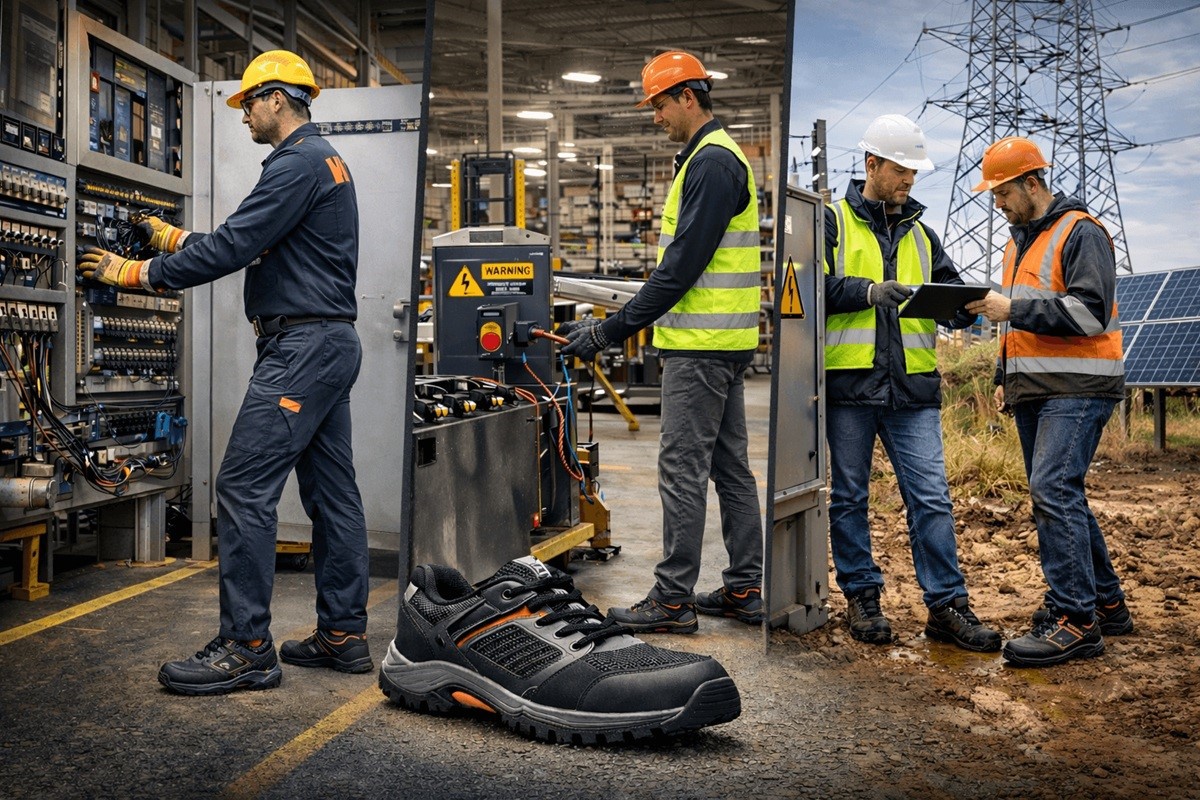
Electrical maintenance on production lines
Factories are full of energized systems: conveyors, motors, PLC cabinets, sensors, heaters, and automated cells. Maintenance technicians often work in tight spaces with mixed hazards-sharp edges, oils, and dust. Electrical insulated safety shoes are especially relevant when:
troubleshooting intermittent faults,
replacing motors or VFDs,
checking terminals and connectors,
working around panels where a misidentified circuit or backfeed is possible.
In these cases, a steel toe is also valuable because maintenance work often involves tools and heavy components-so you're managing impact + electrical risk at the same time.

Switchgear rooms, MCC areas, and control cabinets
These areas concentrate electrical infrastructure. Even with good procedures, the risk comes from:
- energized enclosures nearby,
- conductive floors or metal gratings,
- accidental contact with grounded structures while stepping on an energized surface.
Shoes with a robust, non-conductive outsole and stable footing can be the difference between a minor incident and a serious one-especially if workers need to move quickly during fault finding or emergency shutdown.
Test benches, QC labs, and repair stations
In repair-and-test zones, equipment may be powered up repeatedly, opened, and reconnected. Hazards include:
- exposed test leads,
- temporary wiring,
- metal worktops and grounded fixtures.
In these environments, footwear selection should be coordinated with your EHS policy because some stations also require ESD control for electronics. If your site handles both electrical hazard and ESD needs, it's important to define zones and choose footwear accordingly rather than assuming one shoe "does everything."
EV/battery manufacturing and high-power charging areas (inside plants)
Even when access is controlled, EV/battery lines can include high-current systems and charging/discharging equipment. Common risk moments are during:
- connector mating/demating,
- maintenance of charging cabinets,
- moving packs/components with conductive casings.
Here, traction matters too-battery production can involve smooth epoxy floors where slip resistance is critical when handling heavy loads or carts.
Wet-process or washdown-adjacent corridors
Water and cleaning chemicals can change floor conductivity and increase slip hazards. Electrical insulated safety shoes are useful in adjacent walkways where maintenance and utilities staff pass through, but you should also prioritize:
- slip-resistant rubber outsoles,
- and a maintenance program that replaces shoes before outsole wear becomes significant.
Warehouse scenarios
Forklift battery charging and maintenance zones
Battery charging stations are a classic warehouse scenario. Risks include:
- exposed terminals,
- damaged charging leads,
- conductive residues on floors,
- rushed operations during shift changes.
Electrical insulated safety shoes are a sensible baseline for staff who regularly pass through or work in these zones-especially if they also move pallets or equipment where toe protection is needed.
Conveyor systems and automated sortation maintenance
Warehouses rely on long runs of conveyors with distributed motors and control boxes. Maintenance staff may step across mixed surfaces (concrete, metal plates, ramps) and work around:
- energized motor housings,
- sensor wiring,
- control cabinets along lines.
A low-cut design can improve mobility for technicians who squat, climb steps, and move frequently, while still keeping protective features like toe protection and traction.
Loading docks and mixed indoor/outdoor transitions
Dock areas are high-risk for both slips and impact hazards. Electrical risks appear when:
- dock levelers and powered doors are serviced,
- temporary power tools are used,
- extension cables run across floors.
In these zones, the most practical combination is often:
- electrical insulation capability,
- slip-resistant outsole,
- and durable construction that tolerates abrasion.
Cold rooms and humidity swings
Cold storage introduces condensation, wet floors, and reduced traction. While footwear insulation performance depends on condition and environment, from a factory standpoint the key is to ensure:
- outsole traction remains reliable at lower temperatures,
- the shoe stays structurally intact (no cracking, delamination),
- and the fit supports stable walking with thicker socks.
Outdoor scenarios
Utilities, telecom, and field service work
Outdoor technicians often work around:
- street cabinets,
- generator hookups,
- temporary site power,
- power distribution boxes.
Risks increase with rain, mud, uneven ground, and metal structures. In these conditions, footwear needs to do two jobs:
- reduce incidental electrical hazard underfoot,
- and maintain stable grip on unpredictable terrain.
A rubber outsole with dependable traction becomes especially important outdoors.
Construction sites with temporary power
Temporary wiring, portable tools, and changing site conditions create exposure points:
- damaged cords,
- wet concrete and puddles,
- metal scaffolding and rebar nearby.
Electrical insulated safety shoes can help reduce risk when workers move across areas where the ground may become energized unexpectedly-while toe protection remains important due to debris and dropped objects.
Renewable energy sites (solar/wind) and maintenance walkdowns
Technicians may cover large areas with electrical infrastructure spread out. The risk isn't only at the equipment-it's also during transit between zones, where surface conditions shift and people may be carrying tools.
Here, comfort and fatigue matter because long walking distances increase strain. A cushioned insole system and breathable upper can meaningfully improve compliance-workers are more likely to wear the right footwear consistently if it stays comfortable through the day.
Procurement checklist (factory-side, practical points)
If you're buying for a site program (or planning OEM/ODM), prioritize these checks:
- Compliance target: Confirm which standard/requirement your market and EHS policy follow (don't mix "ESD" and "electrical insulated" requirements without a clear zone plan).
- Outsole condition and material: Traction and insulation performance depend heavily on outsole integrity-spec for abrasion resistance and slip performance suitable for your floor types.
- Toe protection level: Many sites need toe protection for handling equipment; steel toe is common for impact resistance.
- Fit range and sizing plan: A wide size run (e.g., EU 36–48) helps reduce substitution and non-compliance.
- Wear-life management: Define replacement triggers (outsole wear, cuts, delamination, loss of tread).
- Customization controls (if OEM/ODM): Lock down outsole compound, construction method, and QC tests before changing cosmetics like logo/colors.
Care and inspection (what actually keeps performance reliable)
From manufacturing and QC experience, the biggest real-world failures come from wear and contamination, not from the original design intent. A simple program helps:
- Keep outsoles clean (oily residues and conductive grime can change surface behavior).
- Inspect for deep cuts, exposed layers, severe tread loss, or peeling.
- Retire shoes that have been heavily soaked repeatedly or show structural breakdown.
- Train supervisors to spot worn tread early-traction loss often shows up before people complain.
What this means on-site
Electrical insulated safety shoes are most valuable in workplaces where electrical exposure is incidental but plausible-maintenance, charging zones, mixed-surface industrial floors, and outdoor service work. When paired with the right procedures and a basic inspection/replacement policy, they're a practical way to reduce risk without slowing the job down.