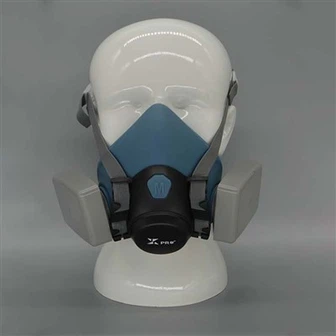
What are the advantages and disadvantages of silicone and rubber half masks?
I. Silicone Half-Face Masks
 Advantages
Comfort and Fit
Silicone is soft and highly elastic, conforming closely to facial contours to minimize pressure marks. For example, the 3M HF-52 silicone mask uses a "high-elasticity silicone sealing ring" to reduce discomfort during prolonged wear.
Hypoallergenic material, ideal for users with sensitive skin (unlike rubber, which may trigger allergies).
Durability and Maintenance
Superior temperature resistance (-40°C to 230°C), maintaining integrity in high-heat environments without deformation or releasing harmful substances.
Excellent chemical resistance to oils, acids, and alkalis, with a lifespan 2-3 times longer than rubber.
Easy to clean with water, leaving no residual odors.
Functional Design
Lower breathing resistance due to features like the "Cool Flow Exhalation Valve" in the 3M 6500QL series.
Enhanced breathability through designs like honeycomb mesh structures (inspired by LED mask improvements).
Disadvantages
Higher Cost
Raw material costs are 2-3 times higher than rubber, increasing initial procurement expenses.
Weight and Fit Requirements
Low-end silicone masks may feel heavier (though premium models weigh as little as 93g).
Requires precise sizing for airtight seals; one-size-fits-all models risk leakage.
II. Rubber Half-Face Masks
Advantages
Cost-Effectiveness
Affordable, suitable for budget-conscious users (e.g., the 3M 6200 rubber mask costs half as much as silicone equivalents).
Generally accommodates diverse facial shapes without strict sizing requirements.
Initial Seal Performance
Harder rubber provides strong initial sealing, especially for users with flatter facial profiles.
Disadvantages
Comfort and Health Risks
Stiff material causes pressure marks during extended wear and offers poor breathability.
Some rubber contains additives that may release odors or toxins in high temperatures.
Durability Issues
Prone to hardening, cracking, or degradation, with a typical lifespan of 1-2 years (vs. 5+ years for silicone).
Weak chemical resistance, degrading when exposed to oils or solvents.
III. Usage Recommendations
Prioritize Silicone For:
Long-term occupational use (e.g., chemical industries, labs), high-heat/corrosive environments, or users with sensitive skin.
Scenarios requiring frequent cleaning (e.g., healthcare, food processing).
Consider Rubber For:
Short-term or low-frequency use (e.g., emergency kits, low-risk tasks).
Budget-limited applications where comfort is secondary.