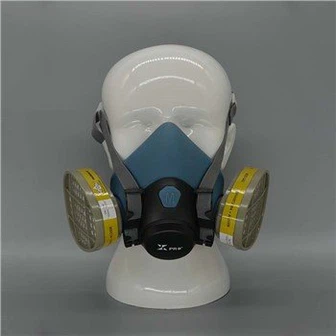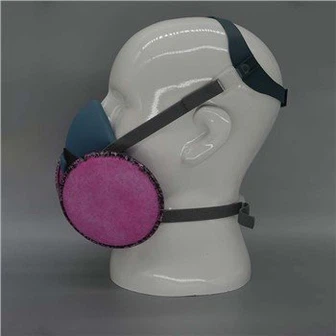
Half-mask respirator filtration process
A half-mask respirator functions through a multi-step filtration process to protect the user from harmful airborne particles and contaminants.
Here's a detailed look at the filtration process:

1. Pre-filtration
Many half-mask respirators have an outer layer that serves as a pre-filter. This layer is designed to capture larger particles such as dust, lint, and some pollen. The pore size of this pre-filter is relatively larger than the inner filter layers, allowing it to trap particles that are usually greater than 10 micrometers in diameter. For example, in a construction site environment, it can effectively block sawdust and other large debris generated during woodworking operations.
2. Electrostatic Filtration
Some advanced respirator filters utilize electrostatic forces. The filter material is charged during the manufacturing process. As airborne particles pass through, they are attracted to the charged fibers of the filter due to electrostatic attraction. This process is highly effective for capturing small particles, especially those in the sub-micrometer range. Particles as small as 0.3 micrometers can be trapped with a high efficiency. For example, in an industrial setting where there are fine oil mists, the electrostatic filter can capture these tiny droplets before they enter the user's respiratory system.
3. Mechanical Filtration (Fiber - based Filtration)
The innermost layers of the filter typically consist of a dense network of fine fibers. These fibers create a complex maze-like structure through which air must pass. As the air containing particles moves through these fiber layers, the particles are physically intercepted and retained. The pores between the fibers are small enough to block particles that are usually in the range of 0.3 - 2.5 micrometers. In a hospital setting, where there may be bacteria and viruses in the air, this fiber-based mechanical filtration helps to prevent these harmful microorganisms from being inhaled.
The combination of these filtration steps in a half-mask respirator helps to ensure that the air inhaled by the user is cleaner and free from a wide range of harmful substances, providing effective protection for the respiratory system. It's important to note that the efficiency of the filtration process also depends on factors such as the fit of the mask on the face and the airtight seal it creates. A proper seal ensures that unfiltered air does not bypass the filter and enter the user's breathing zone.