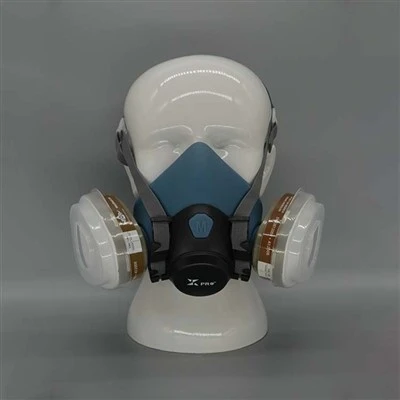
When to Replace Respirator Filters or Cartridges
The timing for replacing respirator filters (cartridges or filter elements) directly impacts protection effectiveness. Replacing them too early wastes resources, while delaying replacement risks poisoning or health damage. Below are specific criteria and scenarios based on NIOSH, OSHA, and industry practices:
 I. Immediate Replacement Required (Emergency Situations)
Detecting odors or tastes of contaminants (e.g., chemical smells, irritant gases).
Significantly increased breathing resistance (requiring forceful breathing, indicating clogging).
Physical damage to the filter (cracks, deformation, moisture, mold).
After exposure to high concentrations of contaminants (even if usage time hasn't reached the limit).
II. Replacement Timing by Filter Type
1. Particulate Filters (e.g., N95, P100)
Applications: Dust, haze, droplets, non-volatile particles.
Replacement Criteria:
Noticeably increased breathing resistance.
Visible stains or deformation on the filter surface.
Typical Lifespan:
Low-dust environments: 40–100 hours.
High-dust environments (e.g., woodworking, mining): 8–24 hours.
2. Chemical Cartridges (Gas/Vapor Filters)
Applications: Organic vapors (spray painting), acid gases (electroplating), ammonia, etc.
Replacement Criteria:
Time-weighted calculations (e.g., manufacturer's stated "8-hour lifespan").
Use End-of-Service-Life Indicators (ESLIs) if available (e.g., color-change indicators).
If unsure: Replace after first exposure (conservative approach).
3. Combination Filters (Particulate + Gas/Vapor)
Replacement Criteria: Follow the gas/vapor cartridge lifespan (usually fails before the particulate filter).
III. Replacement Frequency in Specific Scenarios
| Scenario | Contaminant Type | Recommended Replacement Frequency |
|---|---|---|
| Spray Painting | Organic vapors (e.g., toluene) | Replace cartridges every 8–10 hours |
| Hospital Infectious Wards | Viral droplets | Replace N95 filters every 4 hours |
| Chemical Plant Leaks | Chlorine/H2S | Replace after single use |
| Woodworking Sanding | Wood dust | Replace P100 filters daily |
IV. Additional Key Notes
Unused Filter Shelf Life:
Typically 3–5 years when stored sealed (see packaging); expired filters may lose effectiveness.
Storage Conditions:
Keep away from heat, moisture, and chemical vapors (unopened filters can still be contaminated).
Prohibited Actions:
Do not wash chemical cartridges (activated carbon loses effectiveness when wet).
Avoid mixing brands of filters (may cause leaks or compatibility issues).