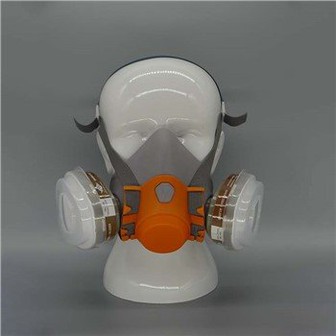
Half Facepiece Respirators vs. Disposable Masks
When choosing a mask, understanding the differences between half facepiece respirators and disposable masks is crucial, especially regarding protection, comfort, and application. Below is a detailed comparison of the two types of masks.
1. Protection Level
Half Facepiece Respirators:
These respirators are equipped with replaceable filters or cartridges that can effectively filter out particles, gases, vapors, and other harmful substances in the air.
Depending on the filter type, they provide comprehensive protection against toxic chemicals, dust, fumes, and more.
Half facepiece respirators offer a higher level of protection, making them suitable for high-risk environments such as industrial work sites, chemical plants, and construction zones.
Disposable Masks:
Disposable masks are mainly designed to protect against large particle pollution and prevent the transmission of respiratory droplets.
They typically do not have filters or cartridges, so they cannot effectively block toxic gases or fine particles. Thus, they are not suitable for high-risk environments.
2. Comfort
Half Facepiece Respirators:
Half facepiece respirators cover the nose, mouth, and sometimes the chin, providing more complete facial protection.
They are typically designed with adjustable head straps, making them more comfortable for long-term wear, reducing facial pressure.
Some models include exhalation valves to reduce moisture and heat buildup, improving comfort during extended use.
Disposable Masks:
Disposable masks generally consist of three layers of material and are lightweight, offering ease of wear but limited facial coverage-primarily covering the nose and mouth.
They are simpler and more comfortable for short-term use but can feel stuffy during prolonged wear, especially in hot or humid conditions.
3. Durability
Half Facepiece Respirators:
These respirators are reusable, with only the filters or cartridges needing periodic replacement.
Their durability and long-term usability make them more cost-effective for industrial applications.
Disposable Masks:
Disposable masks are intended for single-use and cannot be reused.
While they are inexpensive and convenient for short-term use, they are less sustainable in terms of both cost and environmental impact over time.
4. Application Scenarios
Half Facepiece Respirators:
Half facepiece respirators are ideal for high-risk environments, such as industrial production lines, chemical factories, construction sites, and laboratories.
They are well-suited for jobs requiring long-term protection and provide professional-grade safety.
Disposable Masks:
Disposable masks are more suitable for basic protection in daily life, such as in public transport, hospitals, and retail environments, to prevent the spread of respiratory viruses.
They are not ideal for high-risk industrial or professional settings due to their limited protection.
Summary
Half facepiece respirators are the ideal choice for high-risk environments, offering superior filtration, comfort, and durability, especially in industrial, chemical, and construction settings.
Disposable masks are more appropriate for everyday use, being lightweight and simple, but their protection is limited primarily to larger particles and droplets.
Choosing the right type of mask based on your specific needs and work environment ensures better protection and comfort.